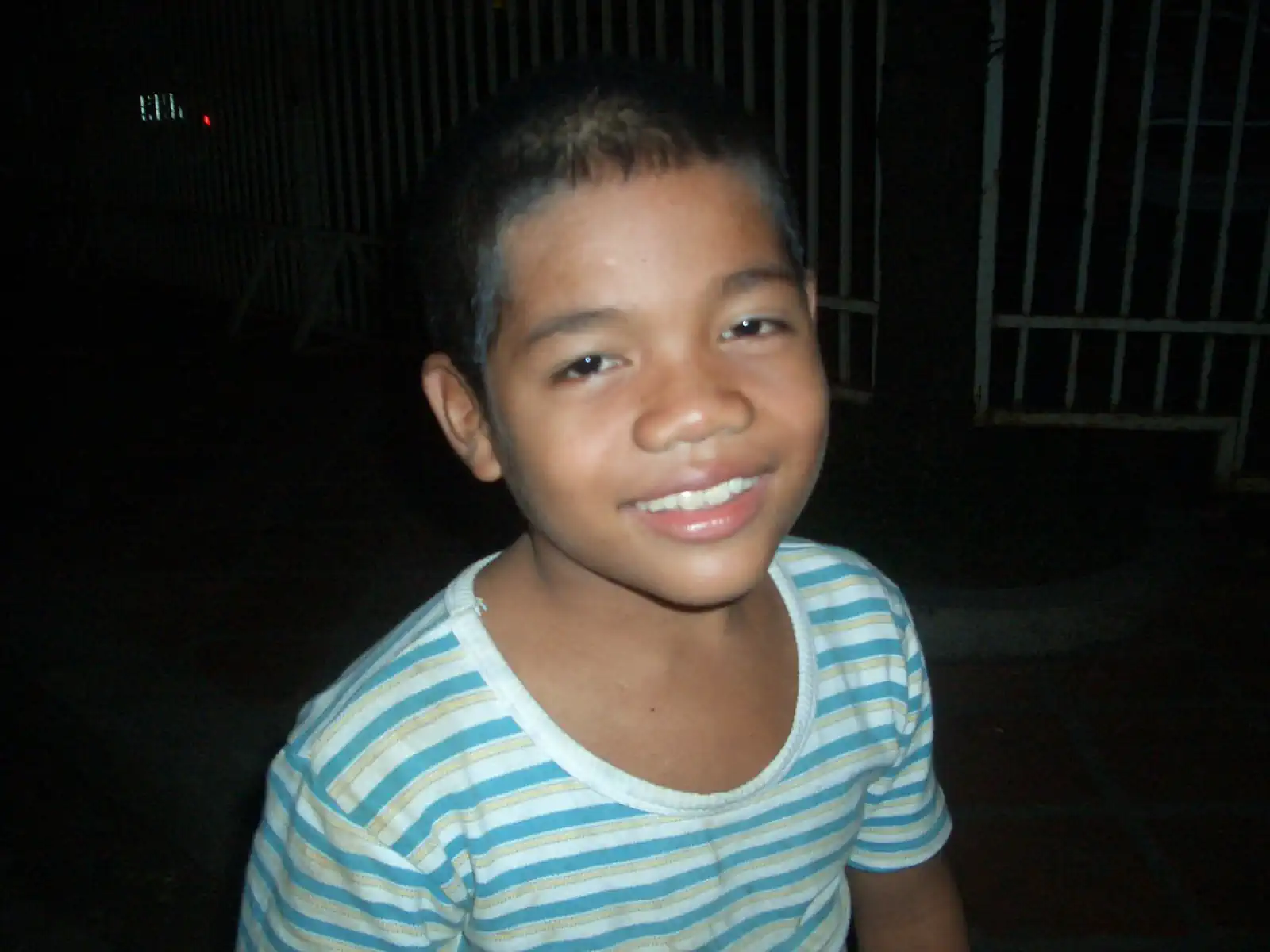
Most of us live with the belief that problems should have solutions, that effort should lead to change and that if a situation is bad enough then surely somebody can fix it. But travel strips away many of those comforting assumptions. Travel sometimes leaves you with monuments, landscapes and photographs. But occasionally it leaves you with something far smaller and far heavier: the memory of a smiling boy on crutches in Cambodia whose name you tried very hard not to learn.
This is the story of the boy with no name, a child we met during three nights in Siem Reap while we were there to visit Angkor Wat.
One of the difficult things about travelling in Asia as a European is the perceived poverty you think you see everywhere. And often that is exactly what it is: your perception, shaped by your own background, expectations and assumptions about how life is “supposed” to look. But beneath all of that there remains one uncomfortable truth. You cannot fix every person with a problem who crosses your path.
We had reached Siem Reap, ready to discover the Angkor Wat complex. We got our driver at the airport and the six of us went on our merry way. My first observation was that they were “civilised”. I nearly burst out laughing to myself as I prepared the comment for my Spanish friends. The van was right-hand drive. The Spanish constantly throw this “why do you drive on the wrong side of the road?” at me as an Irishman, so I was fully prepared to stir some muck.
Then I realised something else.
As co-pilot, I was sitting in the middle of the road. Not the driver. And once I noticed that, everything became even stranger. Most of the oncoming cars appeared to be left-hand drive. But not all of them. Traffic seemed to operate on a kind of collective optimism and mutual negotiation rather than anything approaching the rigid logic of the Irish or the Spanish systems.
My snide little moment of triumph died fairly quickly, replaced mostly by confusion and fascination. But it gave us something to laugh and talk about as we drove into the city.
Siem Reap itself was still quite underdeveloped then. Dirt roads in places. Dim lighting. Empty stretches between buildings. It felt unexplored by mass tourism in a way that made the whole place seem immediate and alive.
I have just looked it up on Google Maps. Bloody hell. It has completely changed. And I do not know why I am surprised.
That first evening we headed out looking for somewhere to eat and crossed paths with a boy who flew around on crutches. He was missing a leg, but seemed more agile than I have ever been. He moved through the streets at speed, grinning constantly, almost oblivious to the fact that half of Europe would have mentally rewritten his entire existence as tragedy before he had even spoken.
And that is the uncomfortable part.
Many people would call that reaction empathy. Sometimes it is. But sometimes, underneath the empathy, there is also a certain quiet prepotencia: the assumption that a life different from ours must automatically be a life waiting to be rescued by ours.
Nearby, around Battambang and other parts of Cambodia, huge areas were still scarred by landmines and unexploded remnants of war. Many local people had been maimed by abandoned explosives left behind long after the conflicts themselves had faded from international attention. Missing limbs were not rare enough to stop you in your tracks every single time. And perhaps that, more than anything, says something horrifying about war and its aftermath.
I have crossed paths with so many people struggling to make a life in different parts of the world. Eventually you learn a brutal truth: you cannot fix them all.
At university, while studying a novel by the Peruvian writer Alfredo Bryce Echenique, one lecturer said there were two people who should never know your name: bar staff, because it suggested too close a relationship with alcohol, and police officers, because it suggested you were known to the authorities.
For reasons I still do not fully understand, that memory surfaced in Cambodia. Along with the woman being asked her name and replying, “Call me what you want, sugar.” My thoughts do that sometimes. They mix serious ideas with nonsense and somehow arrive at an emotional truth sideways.
And somewhere in the middle of all that noise, my brain settled on one repetitive instruction:
Don’t ask his name.
You DON’T need to know his name.
This was obviously self-protection. Because names change things. A child selling souvenirs or chatting to tourists remains abstract until you know his name. Once you know it, the brain files them differently. They stop being part of the scenery of travel and become specific. Human. Permanent.
So for three nights we bantered with the boy with no name in broken English. He appeared every evening with the same enormous smile and the same impossible speed on those crutches. We joked. He joked back. And all the while, my brain kept quietly repeating:
Don’t ask his name.
We had come to Siem Reap to see Angkor Wat, but the memory that stayed with me most had nothing to do with temples.
On the third night, as we were walking back towards the inn, one of the group suddenly sped up. I remember internally panicking in a completely irrational way because I knew exactly where this was going.
Then I heard it.
In broken Spanglish, she called out: “What is your name?”
And suddenly my internal wall of self-protection collapsed because once the question existed, the answer was going to come and haunt me to this day.
Kim.
In my first blog post Travellismus – The Blog I tried to explain what I mean when I use the word Travellismus. The boy with no name is part of that idea too. We travelled to Siem Reap to see Angkor Wat, but the memory that followed me home was not a temple, a monument or a photograph. It was the uncomfortable realisation that some encounters stay with you precisely because you know you cannot fix them.
If you’d like to understand why Angkor Wat leaves such a lasting impression on so many travellers, have a look here: UNESCO World Heritage Centre – Angkor