This Classic India and Nepal journey is a cultural itinerary covering the main destinations of northern India and Nepal over 12 days. The route links Delhi, Agra, Rajasthan, Varanasi and Kathmandu, combining major historical landmarks with everyday experiences that add context and depth to the trip.
The route explores the cultural heart of India, from Mughal architecture and Rajput cities to the spiritual dimension of the Ganges, before continuing on to Nepal, where both the landscape and the rhythm change completely. Guided visits are complemented by free time at key points, allowing you to enjoy each destination without rush or overload.
The programme includes international and domestic flights, accommodation in selected or similar hotels, private transport throughout the itinerary and a Spanish-speaking guide at the main stages. An ideal first introduction to two countries as complex as they are fascinating.
The latest review of Classic India and Nepal was on 26 January 2026.
These are the highlights of the trip:
- X

Delhi
Agra
Jaipur
Jhansi
Orchha
Khajuraho
Varanasi
Kathmandu
Swayambunath
Patan
Boudhanath
Pashupatinath
Itinerary
Day 1: Classic India and Nepal begins with arrival in Delhi
Arrival in Delhi. Reception at the airport by the local representative and private transfer to the hotel. Check-in and operational briefing of the trip (schedules and logistics). Accommodation.
X
Meals
—
Transport
Airport → hotel transfer
Accommodation
Delhi (2 nights): Bel Morris (3*) / Park Plaza (4*) / Crowne Plaza (5*) or similar
Visits
- —
Day 2: Delhi
Breakfast. Exterior stop at the Red Fort and walk through Chandni Chowk. Rickshaw access to Jama Masjid. Visit to the Gandhi Memorial. Panoramic tour of New Delhi (India Gate, Presidential Palace and Parliament). Visit to a Sikh temple and the Qutub Minar complex. Dinner and accommodation.
What you are seeing (+)
Chandni Chowk (+)
Chandni Chowk, designed as the main avenue of the Mughal capital in the 17th century, is one of the oldest and most chaotic streets in Delhi. Today it is the historic-commercial centre of the old city. But it is not “a picturesque market”: it is an entire neighbourhood in operation.
Chandni comes from Hindi/Urdu and means “moonlight”. Originally there was a water channel that reflected the moon at night.
Chowk means “square” or “junction”. In northern India, a chowk is an important crossroads: where everything passes, where everything is sold, where everything gets blocked.
Chandni Chowk means narrow streets, thousands of people, spice shops, fabrics, jewellery, electronics, food carts, bicycles, motorbikes, pedestrians, cows, noise, smells, heat, chaos. This is Delhi without filters. It is not a visit for aesthetics. You come here to understand how the city works: how people shop, how they move, how they live.
Classic India and Nepal · AlanSpeak Travel
Jama Masjid (+)
Jama Masjid is the largest mosque in India and one of the main centres of Islam in the subcontinent. It was built in the 17th century by the Mughal emperor Shah Jahan as the imperial mosque of Delhi, at the height of Mughal power.
It is not an isolated historical monument: it is still an active religious space. Prayers take place five times a day, festivals are celebrated and the Muslim community of the old city gathers here. It is part of everyday life.
Why are you here? Because Jama Masjid explains the religious dimension of Mughal power. If the Red Fort shows how they ruled, Jama Masjid shows what they believed in.
In practice, you enter barefoot, with respectful clothing, and walk through a vast open courtyard surrounded by minarets and prayer halls. It is not a museum visit. It is a living place.
Classic India and Nepal · AlanSpeak Travel
Gandhi Memorial (+)
The Gandhi Memorial, known as Raj Ghat, is the place where Mahatma Gandhi was cremated after his assassination in 1948. It is not a tomb, but a symbolic space marking the exact site of the cremation.
The site is deliberately austere: a black marble platform, an eternal flame and surrounding gardens. There are no statues or visual speeches. The form matches the figure it commemorates.
Why are you here? Because Gandhi is a foundational figure of modern India. Without him, the independence process and the country’s political identity after British rule cannot be understood.
In practice, you walk in silence, leave your shoes outside and move through the space in a few minutes. It is a brief, reflective and calm stop. It is not a museum: it is a place of memory.
Classic India and Nepal · AlanSpeak Travel
India Gate (+)
India Gate is a monumental arch built by the British in 1931 as a memorial to Indian soldiers who died fighting for the British Empire during the First World War and later colonial campaigns.
It is not a functional gate and does not lead anywhere. It is a commemorative imperial-style monument, located at the centre of the urban layout of New Delhi designed during the colonial period.
Why is it visited? Because it represents the physical trace of British rule in India. It is one of the clearest symbols of how colonial power was inscribed into the landscape of the capital.
In practice, it is a short stop. You see the arch, walk through the gardens, there are usually local families, vendors and traffic around. It is not a place of deep historical content, but it helps understand who designed New Delhi and why.
Classic India and Nepal · AlanSpeak Travel
Presidential Palace and Parliament (+)
The Presidential Palace and Parliament form part of the central administrative complex of New Delhi, designed by the British in the early 20th century as the capital of the Raj.
The Presidential Palace, known as Rashtrapati Bhavan, was originally the residence of the British viceroy. Today it is the seat of the President of India, a symbolic figure within the democratic system.
Parliament is the building where the country’s legislative power meets. It represents institutional continuity between the colonial period and independent India.
Why are they visited? Because they explain how power shifted from the British Empire to the modern Indian state. You do not enter the buildings: they are observed panoramically as part of the imperial urban design.
In practice, it is a visual stop from the outside. Wide avenues, monumental architecture and a sense of planned space. It is less about what you see and more about understanding how power was constructed in this city.
Classic India and Nepal · AlanSpeak Travel
Qutub Minar (+)
Qutub Minar is a minaret over 70 metres high, begun in the 12th century after the arrival of the first Muslim sultanates in northern India. It marks the beginning of Delhi as an Islamic city.
It is also written as Qutb Minar or Qutab Minar, depending on the transliteration system. In practice, in India the form Qutub is most commonly used.
It is not just a tower: it is part of a complex of mosques, courtyards and remains of earlier constructions. It is architecture, but also politics.
Today it is a quiet archaeological site, far from the chaos of the centre. You walk among ruins, columns and inscriptions. It is not spectacular in a modern sense. It is important because it places you at the exact moment when Delhi begins to become what it is.
Classic India and Nepal · AlanSpeak Travel
X
Board
Half board
Transport
Private transport in Delhi
Rickshaw (Chandni Chowk → Jama Masjid)
Accommodation
Delhi (2 nights): Bel Morris (3*) / Park Plaza (4*) / Crowne Plaza (5*) or similar
Visits
- Red Fort (exterior stop)
- Chandni Chowk
- Jama Masjid
- Gandhi Memorial
- India Gate (panoramic)
- Presidential Palace and Parliament (panoramic)
- Sikh Temple
- Qutub Minar
Day 3: from Delhi to Jaipur
Breakfast. Departure by road to Jaipur. Arrival, check-in and afternoon visits: Albert Hall and Birla Temple. Dinner and accommodation.
What you are seeing (+)
Albert Hall (Jaipur) (+)
Albert Hall is a state museum located in Jaipur, built at the end of the 19th century during the period of the British Raj. It is the oldest museum building in Rajasthan.
It was designed as an “educational” institution in the European style, to exhibit art, crafts, weapons, textiles and historical objects from the region. The name is colonial: it was given in honour of Prince Albert, consort of Queen Victoria.
Why does it exist? Because the British wanted to catalogue, classify and display Indian culture under a Western museum model. It is part of the same administrative impulse that created imperial archives, censuses and collections.
In practice, it is a calm and relatively short visit. The real interest is not so much the content as the building itself, in Indo-Saracenic style. It is an urban context stop, not an essential experience.
Classic India and Nepal · AlanSpeak Travel
Birla Mandir (Jaipur) (+)
Birla Mandir is a modern Hindu temple located in Jaipur, built in 1988 by the Birla family, one of the major industrial groups in India. It is mainly dedicated to Vishnu and Lakshmi.
It is not a historical temple in the traditional sense. It forms part of a series of similar temples in different Indian cities, conceived as clean, accessible religious spaces open to the urban public.
Why is it visited? Because it represents a contemporary version of Hinduism: orderly, visible and designed for both worshippers and visitors. It is religion without the ritual weight or chaos of older temples.
In practice, it is a quiet visit, with good views over the city and a relaxed atmosphere. It is not a place of deep historical content. It works more as an introduction to Hinduism than as a key piece of India’s past.
Classic India and Nepal · AlanSpeak Travel
Raj Mandir Cinema (Jaipur) (+)
Raj Mandir is one of the most famous cinemas in India and an icon of popular film culture. It opened in 1976 and is an extreme example of late Art Deco applied to a movie theatre.
It is not famous for the films, but for the experience: exaggerated façade, theatrical interiors, music before the screening, participative audience and an emotional relationship with cinema that in Europe has almost disappeared.
Why does it exist? Because in India cinema is a form of collective ritual. A film is not simply “consumed”: it is shared, commented on and celebrated.
In practice, going to Raj Mandir means sitting in a huge hall with hundreds of people, watching a commercial Indian film (usually in Hindi), hearing applause, laughter and loud comments, and leaving with the feeling of having taken part in something social, not just having watched a screen.
Classic India and Nepal · AlanSpeak Travel
X
Meals
Half board
Transport
Road transport Delhi → Jaipur
Accommodation
Jaipur (2 nights): Lilypool (3*) / Ramada (4*) / Royal Orchid (5*) or similar
Visits
- Albert Hall
- Birla Temple
Day 4: Jaipur
Breakfast. Excursion to Amber Fort (access by elephant). Visit to the astronomical observatory and the Maharaja’s Palace. Urban tour with an exterior stop in front of the Palace of the Winds. Dinner and accommodation.
What you are seeing (+)
Amber Fort (Jaipur) (+)
Amber Fort is a fortress-palace located on the outskirts of Jaipur, built between the 16th and 17th centuries as the residence of the maharajas of Amber, before the city of Jaipur existed.
It is not a military castle in the European sense. It is a combination of defensive fortress and ceremonial palace, designed to govern and to impress. This is where political power in the region was concentrated.
Why does it exist? Because the kingdoms of Rajasthan needed structures that protected the ruler and at the same time staged his authority. Power was displayed both through walls and through marble and courtyards.
In practice, you climb the hill, walk through halls, courtyards, pavilions and viewpoints. It is a long visit, with stairs and quite a lot of heat. The real interest is not decoration, but understanding how power was lived and represented in pre-colonial India.
Classic India and Nepal · AlanSpeak Travel
Jantar Mantar (Jaipur) (+)
Jantar Mantar is an astronomical observatory built in the 18th century by Maharaja Jai Singh II, founder of Jaipur. It is part of a network of similar observatories built in several cities across northern India.
It is not a modern science museum, but a set of giant stone instruments designed to measure time, the positions of the sun, moon and planets, and to calculate eclipses and calendars.
Why does it exist? Because in pre-colonial India astronomy had practical value: it served administration, religion and astrology, which were closely linked.
In practice, you walk among monumental geometric structures that look abstract, but had precise functions. It is not an emotional or aesthetic visit. It is a place to understand how the sky was observed before modern technology.
Classic India and Nepal · AlanSpeak Travel
Hawa Mahal (Jaipur) (+)
Hawa Mahal is a palace façade built in 1799 as part of the City Palace complex. Its main function was not residential, but visual.
It was designed so that women of the court could observe city life without being seen, following the rules of female seclusion of the time. The hundreds of small windows allowed looking out while remaining anonymous.
Why does it exist? Because power was also exercised through invisibility. Seeing without being seen was a form of social control.
In practice, it is an exterior stop for photos. The interior is narrow and not very spectacular. Its real value is urban and symbolic: understanding the relationship between palace and street.
Classic India and Nepal · AlanSpeak Travel
City Palace (Jaipur) (+)
City Palace is the former royal palace of Jaipur, built in the 18th century by Maharaja Jai Singh II, founder of the city. It is still partially a residence of the royal family.
It is not a single building, but a complex of courtyards, ceremonial halls and museums located in the heart of the historic centre, just behind Hawa Mahal.
Why does it exist? Because Jaipur was conceived as a planned capital and the palace was the symbolic nucleus of political and administrative power.
In practice, it is a museum visit: royal costumes, weapons, portraits and palace architecture. It is interesting as urban context, but usually less striking than Amber Fort.
Classic India and Nepal · AlanSpeak Travel
X
Board
Half board
Transport
Private transport in Jaipur and surroundings
Accommodation
Jaipur (2 nights): Lilypool (3*) / Ramada (4*) / Royal Orchid (5*) or similar
Visits
- Amber Fort
- Astronomical Observatory (Jantar Mantar)
- Maharaja’s Palace
- Palace of the Winds (exterior stop)
Day 5: Jaipur / Agra
Breakfast. Departure towards Fatehpur Sikri and continuation to Agra. Visits indicated in the programme (includes Mother Teresa Centre). Dinner and accommodation.
What you are seeing (+)
Fatehpur Sikri (+)
Fatehpur Sikri is a palace city built in the 16th century by the Mughal emperor Akbar as the capital of his empire. Today it is completely abandoned.
It is not just any ruin, but a planned capital: palaces, mosques, courtyards, audience halls and royal residences designed to rule an empire from scratch.
Why does it exist? Because Akbar wanted to found a new capital in a place considered spiritually favourable. It was both a political and symbolic decision.
Why was it abandoned? Mainly due to water supply problems. The city was occupied for only a few years before the capital was moved again.
In practice, it is a long outdoor visit, with large open spaces, red stone, heat and few services. The interest is not in details, but in walking through an imperial capital that never fully worked.
Classic India and Nepal · AlanSpeak Travel
X
Board
Half board
Transport
Road transport Jaipur → Fatehpur Sikri → Agra
Accommodation
Agra (2 nights): Crystal Inn (3*) / Ramada (4*) / Courtyard Marriott (5*) or similar
Visits
- Fatehpur Sikri
- Mother Teresa Centre (as per programme)
Day 6: Agra
Breakfast. Visit to the Taj Mahal and the Red Fort of Agra. Dinner and accommodation.
What you are seeing (+)
Red Fort of Agra (+)
The Red Fort of Agra is a fortress-palace built in the 16th century as the main residence of the Mughal emperors before the definitive move to Delhi.
It was not only a defensive structure, but the political centre of the empire: embassies were received here and key decisions were made.
Why does it exist? Because Mughal power was exercised from closed, controlled and symbolically imposing spaces. The palace itself was part of the political message.
In practice, this is where Shah Jahan spent his final years imprisoned by order of his son Aurangzeb. From here he could see the Taj Mahal across the river. It is the political and human counterpoint to the monument of love.
Classic India and Nepal · AlanSpeak Travel
Itimad-ud-Daulah (Baby Taj) (+)
Itimad-ud-Daulah is a mausoleum built in the early 17th century for Mirza Ghiyas Beg, a high Mughal official and grandfather of Mumtaz Mahal.
It is known as the “Baby Taj” because it was one of the first buildings to use white marble and inlaid decoration, anticipating the style of the Taj Mahal.
Why does it exist? Because the imperial family used architecture as a tool of prestige. It was not just a burial, it was a statement of status.
In practice, it is a quiet visit, with fewer tourists and a more architectural focus. It works as a general rehearsal for the Taj: the experiment before the final masterpiece.
Classic India and Nepal · AlanSpeak Travel
Taj Mahal (+)
The Taj Mahal is a mausoleum built in the 17th century by the Mughal emperor Shah Jahan to bury his wife Mumtaz Mahal, who died in childbirth. The origin is real: personal grief turned into an imperial project.
It is not a palace, nor a temple, nor a residence. It is a monumental tomb conceived as a public statement of power, memory and dynastic prestige. Love exists, but it is expressed in the language of absolute power.
It is built mainly in white marble brought from Rajasthan, inlaid with semi-precious stones such as jade, lapis lazuli, carnelian and onyx. The decoration is not paint: they are pieces of stone cut and inlaid one by one.
In practice, it is perfect symmetry, polished surfaces and an almost unreal sense of geometric cleanliness. It is beautiful, but not intimate. Its value is not romantic but historical: understanding how a private emotion became one of the greatest exercises in political architecture in history.
Classic India and Nepal · AlanSpeak Travel
X
Board
Half board
Transport
Private transport in Agra
Accommodation
Agra (2 nights): Crystal Inn (3*) / Ramada (4*) / Courtyard Marriott (5*) or similar
Visits
- Taj Mahal
- Red Fort of Agra
Day 7: Agra / Jhansi (train) / Orchha / Khajuraho
Breakfast. Shatabdi Express train to Jhansi. Continuation by road to Orchha and visit to the Raj Mahal Palace. Continuation to Khajuraho. Dinner and accommodation.
What you are seeing (+)
Shatabdi Express (+)
Shatabdi Express is a daytime high-speed train service operated by Indian Railways that connects major cities with reduced travel times.
It is not a luxury train or a tourist train. It is modern intercity transport, with assigned seats, air conditioning and basic onboard meal service.
What does this mean in practice? It is the Indian equivalent of an AVE, AVLO or European Intercity: faster and more comfortable than a regional train, but without frills.
In real terms, you travel seated, with fairly good punctuality by Indian standards, no cabins and no romantic railway atmosphere. It is simply the most efficient way to move between cities without flying.
Classic India and Nepal · AlanSpeak Travel
Raj Mahal (Orchha) (+)
Raj Mahal is the main historic palace of Orchha, built in the 16th and 17th centuries as the residence of the local rulers of the Bundela dynasty.
It is not a luxury palace in the Mughal style, but an austere fortress-palace, with courtyards, terraces and halls decorated with religious and courtly mural paintings.
Why does it exist? Because Orchha was an independent regional capital, not directly part of the Mughal Empire. The palace reflects a local form of power, more defensive than ceremonial.
In practice, it is a quiet visit, without crowds, where you walk through almost empty spaces and observe old frescoes, steep staircases and views over the Betwa River. Its interest is contextual: understanding what political life was like outside the great empires.
Classic India and Nepal · AlanSpeak Travel
X
Meals
Half board
Transport
Shatabdi Express train Agra → Jhansi
Road transport Jhansi → Orchha → Khajuraho
Accommodation
Khajuraho (1 night): Bundela (3*) / Chandela (4*) / Ramada (4*) or similar
Visits
- Orchha: Raj Mahal Palace
Day 8: Khajuraho / Varanasi
Breakfast. Visit to the temples of Khajuraho. Flight to Varanasi. In the afternoon, Aarti ceremony on the banks of the Ganges. Dinner and accommodation.
What you are seeing (+)
Temples of Khajuraho (+)
The temples of Khajuraho are a group of Hindu and Jain temples built between the 10th and 11th centuries by the Chandela dynasty in central India.
They are known for their erotic sculptures, although these represent only part of the ensemble. Most of the decoration shows scenes of everyday life, gods, musicians, warriors and rituals.
Why do they exist? Because in Indian tradition sexuality was part of the cosmic and religious order, not a taboo separate from the sacred.
In practice, it is an open-air architectural visit, with well-preserved temples and a calm atmosphere. The real interest is not provocation, but understanding a culture where the physical, the spiritual and the symbolic were not in conflict.
Classic India and Nepal · AlanSpeak Travel
Varanasi and the Aarti ceremony (+)
Varanasi, also known as Benares, is one of the oldest continuously inhabited cities in the world and the main spiritual centre of Hinduism. It is located on the banks of the Ganges River.
Aarti is a ritual ceremony held every evening on the river ghats. It consists of offerings of fire, incense, chants and synchronised movements performed by priests facing the water.
Why does it exist? Because the Ganges is not just a river, it is a deity. Aarti is a form of collective gratitude and direct connection with the sacred.
In practice, it is a public, large-scale and visual act, with hundreds of people watching from the steps or from boats. It is not originally a tourist show, although today both worshippers and visitors share the space. It is an intense experience, more social than intimate.
Classic India and Nepal · AlanSpeak Travel
X
Meals
Half board
Transport
Transfers and private transport (as per programme)
Domestic flight Khajuraho → Varanasi
Accommodation
Varanasi (1 night): Cocasa (3*) / Rivatas (4*) / Madin (4*) or similar
Visits
- Temples of Khajuraho
- Varanasi: Aarti ceremony (Ganges)
Day 9: Classic India and Nepal moves from Varanasi to Kathmandu
At dawn, boat ride on the Ganges and walking tour through the old city. Flight to Kathmandu. Arrival, transfer and accommodation. Dinner.
What you are seeing (+)
Boat ride on the Ganges (+)
The boat ride on the Ganges is a direct way to observe the religious and social life of Varanasi from the water, travelling along the ghats early in the morning or at sunset.
It is not a cruise or a recreational tourist activity. It is a traditional means of transport and a privileged viewpoint for understanding how the city is organised around the river.
Why is it done? Because the Ganges is the spiritual axis of the city: on its banks people pray, meditate, wash, cremate the dead and celebrate everyday life.
In practice, you travel in simple boats, without technical explanations, seeing rituals, temples, cremations and local activity. It is an experience of observation, not interaction, and is usually most powerful at dawn.
Classic India and Nepal · AlanSpeak Travel
Walk through the old part of Varanasi (+)
The walk through the old part of Varanasi consists of exploring on foot the labyrinth of narrow streets surrounding the Ganges ghats, where the city’s religious and commercial life is concentrated.
It is not a monumental historic centre in the European sense, but a living urban network, with temples, shops, pilgrims, cows, motorbikes, rituals and constant activity.
Why is it done? Because it is the only way to understand how the city really works: not through isolated monuments, but through the everyday movement of people.
In practice, you walk among crowds, noise, smells, food stalls, improvised altars and impossible traffic. It is not a comfortable or orderly visit. It is a direct immersion in Indian urban life.
Classic India and Nepal · AlanSpeak Travel
X
Meals
Half board
Transport
Boat on the Ganges (Varanasi)
Domestic flight Varanasi → Kathmandu
Airport → hotel transfer
Accommodation
Kathmandu (3 nights): Comfort / Nomad (3*) / Shambala (4*) / Hyatt Centric (5*) or similar
Visits
- Boat ride on the Ganges (dawn)
- Walking tour through the old city
Day 10: Kathmandu / Swayambunath / Patan
Breakfast. Visit to Kathmandu (including the surroundings of the Kumari). Visit to the Swayambunath stupa. Continuation to Patan and visit to the palace complex. Dinner and accommodation.
What you are seeing (+)
Kathmandu and Durbar Square (+)
Durbar Square is the historic central square of Kathmandu and the former nucleus of royal power in Nepal. Palaces, temples and administrative buildings were concentrated here.
It is not a uniform monumental square, but a dense ensemble of religious and civil architecture, the result of centuries of urban accumulation.
Why does it exist? Because in Nepal political and religious power were closely linked. The king ruled from a sacred space.
In practice, it is a chaotic and fascinating visit, with active temples, tourists, traders and worshippers sharing the same space. It is not a museum: it is a living city.
Classic India and Nepal · AlanSpeak Travel
Kumari Palace (+)
The Kumari Palace is the official residence of the living goddess of Nepal, a girl considered the incarnation of the goddess Taleju.
The Kumari is not a symbolic figure: she is a real person selected according to very strict religious and physical criteria.
Why does it exist? Because in Nepali tradition the divine can manifest in a human body. Royal power and the sacred legitimise each other.
In practice, the palace is observed from the inner courtyard. Seeing the Kumari is exceptional and brief. It is not a show, it is an active belief.
Classic India and Nepal · AlanSpeak Travel
Swayambunath (Monkey Temple) (+)
Swayambunath is one of the oldest and most sacred Buddhist stupas in Nepal, located on a hill overlooking the entire Kathmandu Valley.
It is a place shared by Buddhists and Hindus, with iconography, rituals and spaces from both traditions coexisting.
Why does it exist? Because Nepali Buddhism is a living tradition, integrated into urban life and not separated from everyday surroundings.
In practice, you climb a long staircase surrounded by monkeys, prayer wheels, prayer flags and pilgrims. The experience is visual and symbolic rather than doctrinal.
Classic India and Nepal · AlanSpeak Travel
Patan Durbar Square (+)
Patan Durbar Square is the historic palace complex of the city of Patan (Lalitpur), former capital of the Kathmandu Valley.
It includes royal palaces, Hindu temples and ceremonial courtyards, with more refined and less chaotic architecture than Kathmandu.
Why does it exist? Because the valley was historically divided into several independent kingdoms, each with its own centre of power.
In practice, it is a calmer and more orderly visit, ideal for appreciating architectural details and understanding the regional politics of pre-modern Nepal.
Classic India and Nepal · AlanSpeak Travel
X
Meals
Half board
Transport
Private transport in Kathmandu / Patan
Accommodation
Kathmandu (3 nights): Comfort / Nomad (3*) / Shambala (4*) / Hyatt Centric (5*) or similar
Visits
- Kathmandu: surroundings of the Kumari
- Swayambunath
- Patan: palace complex
Day 11: Kathmandu / Boudhanath / Pashupatinath
Breakfast. Visits to Boudhanath and Pashupatinath as per programme. Dinner and accommodation.
What you are seeing (+)
Boudhanath (+)
Boudhanath is one of the largest Buddhist stupas in the world and the main centre of Tibetan Buddhism in Nepal.
The stupa is a symbolic structure representing the universe and the enlightened mind. Worshippers walk clockwise around it, turning prayer wheels and reciting mantras.
Why does it exist? Because Nepal is a key point of the Tibetan diaspora. After the Chinese occupation of Tibet, many monks settled here.
In practice, it is a calm, circular and repetitive space: incense shops, monasteries, monks, pilgrims and tourists moving slowly around the same point. It is collective meditation rather than a monument.
Classic India and Nepal · AlanSpeak Travel
X
Meals
Half board
Transport
Private transport in Kathmandu
Accommodation
Kathmandu (3 nights): Comfort / Nomad (3*) / Shambala (4*) / Hyatt Centric (5*) or similar
Visits
- Boudhanath
- Pashupatinath
Day 12: Classic India and Nepal comes to an end. Kathmandu – Delhi – Home
Breakfast. Flight to Delhi. On arrival, transfer for dinner at a local restaurant and then transfer to the international airport for the return flight.
X
Meals
Breakfast and dinner
Transport
International flight Kathmandu → Delhi
Transfers in Delhi (as per operations)
Transfer to the international airport
Accommodation
—
Visits
- —
Departures
Arrivals and availability for Classic India and Nepal
Arrival in Delhi on Mondays, Wednesdays and Fridays during the 2025–2026 season. This is a DEL–DEL programme (it starts and ends in Delhi), so availability is based on arrival days rather than flights from Spain. The trip operates on request and is subject to confirmation depending on flight and hotel availability at the time of booking.
Scheduled arrival dates:
- January 2026: 28, 30
- February 2026: 2, 4, 6, 9, 11, 13, 16, 18, 20, 23, 25, 27
- March 2026: 2, 4, 6, 9, 11, 13, 16, 18, 20, 23, 25, 27, 30
- April 2026: 1 and 3
A high-demand supplement may apply, especially between 1 and 20 February 2026. Please check at the time of booking.
Accommodation Types
Planned or similar hotels for this Classic India and Nepal
- Delhi · Bel Morris 3* / Park Plaza 4* / Crowne Plaza 5*
- Jaipur · Lilypool 3* / Ramada 4* / Royal Orchid 5*
- Agra · Crystal Inn 3* / Ramada 4* / Courtyard Marriott 5*
- Kathmandu · Comfort / Nomad 3* / Shambala 4* / Hyatt Centric 5*
Price includes
The price includes
- Airport–hotel and hotel–airport transfers
- Private transport throughout the itinerary, as per programme
- Shatabdi Express train (Agra–Jhansi)
- International flight Varanasi–Kathmandu
- International flight Kathmandu–Delhi
- Accommodation in planned or similar hotels, according to the selected category and availability
- Half-board basis: daily breakfasts and dinners as per itinerary (except first night)
- Visits, entrance fees and excursions indicated in the programme
- Spanish-speaking driver–guide for two passengers
- Guides available in Spanish, English, Italian, German and French (subject to availability)
- 24-hour assistance during the trip
Price does not include
The price does not include
- International flights to and from India
- Visa (can be arranged on request)
- Travel and cancellation insurance
- Drinks with meals
- Tips and personal expenses
- Any other service not expressly indicated as included
Remarks
Important notes for Classic India and Nepal
- Visa: visas for India and Nepal are not included. We can arrange the process on request.
- Departures: regular arrivals in Delhi on Mondays, Wednesdays and Fridays.
- Small group: maximum 8 passengers.
- Hotels: the hotels listed are indicative. Final accommodation is confirmed at the time of booking, subject to availability.
- Triple rooms: not recommended for three adults. In India and Nepal these are usually double rooms with an extra bed.
- Itinerary: the order of visits may change for operational reasons, while maintaining the planned services.
- Extensions: possibility of adding extra nights or destinations on request.
- Insurance: travel insurance is not included and is strongly recommended.
Links of interest
Useful resources for travelling on Classic India and Nepal
To prepare your trip with reliable and up-to-date information, these official and reference resources are especially recommended. All external links open in a new window.
To complement your experience, you can explore excursions, activities and guided visits in different destinations across the country through
Civitatis · India
.
More travel inspiration
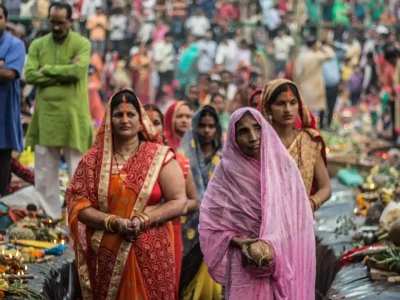
Classic India and Nepal
Classic India and Nepal: a journey through northern India and Nepal combining Delhi, Rajasthan, Varanasi and the Ganges in a complete cultural itinerary.
Imperial Cities-I from Asturias
Imperial Cities tour of Morocco from Asturias, featuring Marrakech, Rabat, Casablanca and Fez, in a well-balanced and culturally rich journey.

A week in Iceland
A week in Iceland, featuring Reykjavík, the Golden Circle, south coast waterfalls, Lake Mývatn and the Snæfellsnes Peninsula, in a well-balanced and naturally focused journey.
For more information, contact me:
Don’t forget to mention the name of the tour and the date or dates that you are interested in.